Realtor Adrienne’s “Zombie House” Saga: One Seller’s Party-Line Sewer Nightmare Next Door
Written by Adrienne Flagg

If you’re getting married for the first time in 40 years, the last thing you want to think about is poop. But unfortunately, my 80-year-old client and I are in the middle of a… poop storm. My client approached me to sell their adorable 1919 cottage in St. Johns, and despite its diminutive size of 544 sq. ft., we both felt confident this home and its charming garden would easily find a new owner. My client had owned it for over 10 years, and despite the next-door neighbor being unsightly, the rest of the neighborhood was as neighborly and delightful as can be—sharing holiday parties, resources, and laughs. But they were also sharing the burden of what I call a “Zombie House.”
I come across a “Zombie House” a couple of times every year in my work. I find them in all kinds of neighborhoods and at every price point. While there is no official definition, I consider a Zombie House to be vacant for two or more years, with numerous code violations reported by the community, numerous fines, and likely back taxes and other delinquent fees. There is no owner in sight and no one trying to make this a better situation. Occasionally, I find they are owned by a bank, investment firm, an out-of-state investor, or an estate representative that is impossible to trace to an actual person.
A Zombie House can become a vortex of illegal and dangerous activity. As of this writing, the house next to my client has over 30 official incidents of violations, including two fires; numerous instances of violent and threatening behavior from people dumping cars and garbage; and unfortunately some drug activity. Far beyond uncut grass, vermin, or garbage dumping (though there are those complaints as well), the neighbors have formed a tight bond, looking out for each other’s safety.
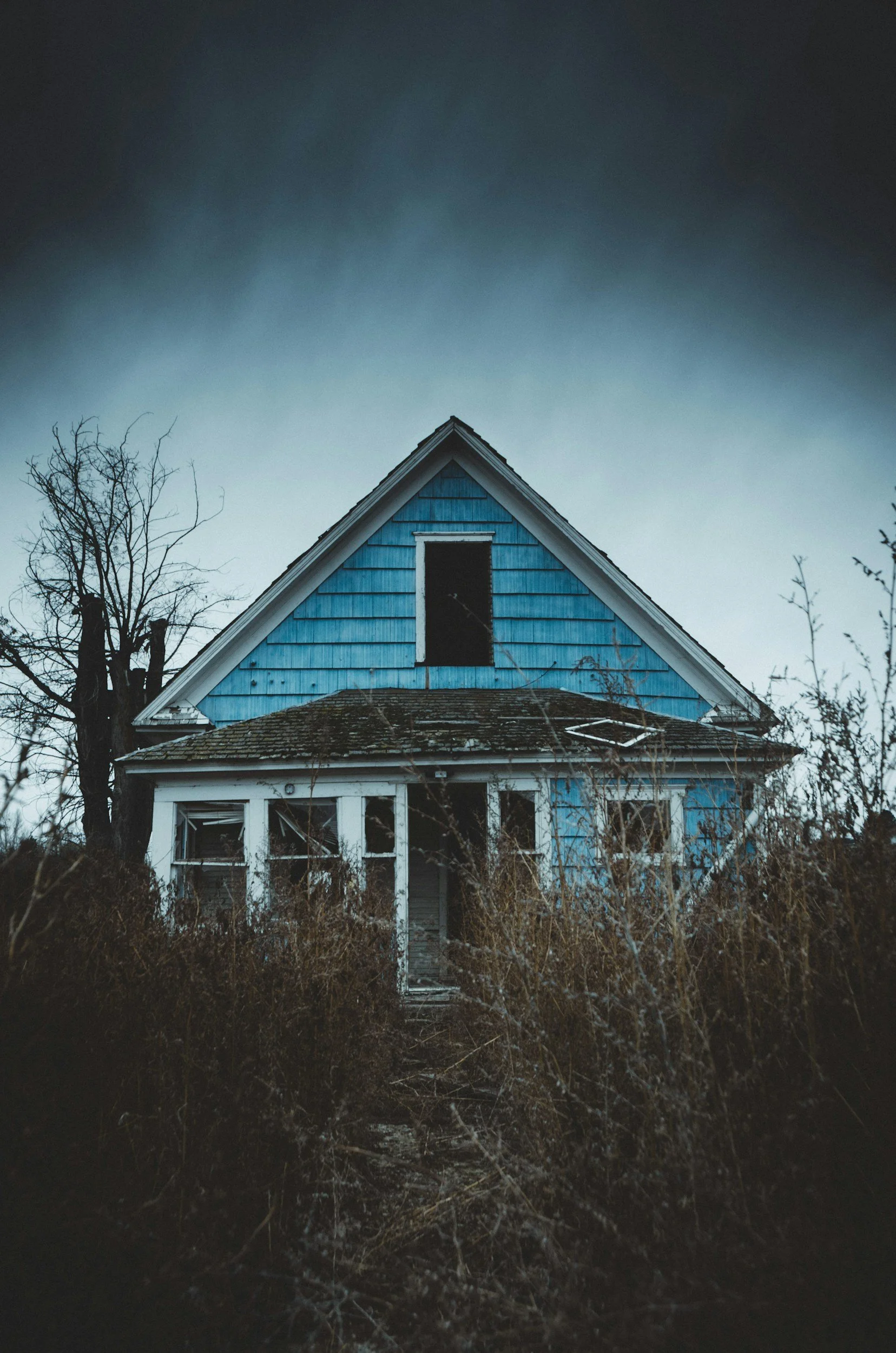
There are many reasons a house might be abandoned. I have been on the other side when a client’s family member passed away and the home was in probate for over a year—this is not unusual. In several cases, I have seen a home abandoned in this process due to too many debts attached to the house, and the inheritors literally could not afford to inherit it. Then it can sit until the bank takes it back, or if there is no bank involved… well, it just sits.
My client was determined, as was I, so while I looked for someone to talk to about the Zombie House, we also began cleaning, painting, and readying their home for listing. I perform quite a bit of investigation during this preparation so there are no surprises for my clients and they can approach a transaction feeling prepared. In addition to the physical home, I also work with my title representative at Chicago Title. We discovered the sewer was a “party line.”
While the home was built in 1919, it wasn’t added to the public sewer until 1925. The neighboring home was added to my client’s sewer line the year after. So my client has a line from their home to the street, but the Zombie House joins that line midway between the two homes, forming a “Y.” The City of Portland Nonconforming Sewer Department is very clear that they “do not get in the way of any real estate transaction.” This was the first line of almost every email reply they sent me regarding this property (October through August). It’s true: you may sell a house with a party line, provided it is in good condition and you can find a buyer comfortable entering that kind of health/safety/financial arrangement with a neighbor. In this case, a Zombie.
Nonetheless, we persisted. But in an effort to be prepared, I recommended my client have a sewer scope performed, as any buyer would likely do the same. There was no point investing money in preparation if the sewer might be a problem. And boy, was it. It completely failed. There wasn’t even any water making it to the sidewalk, let alone the main line in the street. It was so damaged we couldn’t see where it was draining to. Likely it was seeping out in several areas underground all along the fence line. It was a mess.
My client and I were disappointed, but also glad we found this out before involving a buyer. “Let’s just fix it!” we thought. And this is when the bureaucracy of the City demonstrates a level of… constipation I could not have anticipated.
If a party sewer line needs a repair, you are required to pull a permit to do so. If you pull a permit to repair a party line, the City will not grant it unless you separate the two homes and give them their own dedicated lines. Cool. I have been through this before and seen it play out a couple of ways: the neighbor can’t afford it (or won’t), so the seller ends up footing the bill for both lines; or both neighbors are able and they split the cost, each covering their own waste line from their home to the street. Huzzah—now we don’t have to talk about it again for 50 years (that’s the average lifespan, though we often see lines well into their 80s that look great). My client’s is 101 years old. And the neighbor is a Zombie.

I had been in contact with the BES Nonconforming Department for 10 months. It was the slowest game of “Go Fish” I have ever played. I asked for information about the sewer line and got nothing. They eventually said they can’t tell us anything other than what’s on Portland Maps. I told them that the sewer branch for this house was not pictured. Then they told me we had to get our own sewer scope. We did and shared the report and video with them. They replied requesting “still photos,” so the sewer contractor (shout-out to Rush Locates) pulled stills from the video. Then they asked for a drawing. We made one. They said, “Not like that—like this,” and sent us an example. Three visits later, the sewer contractor and I delivered every Go Fish card we could possibly think of, and I heard nothing.
As you may have realized, I am tenacious. I called and emailed many, many times in a single day. Every time, I got an automated reply that they do not get in the way of a real estate transaction. That night at 5:45, I got a call from a man named Chai from BDS. He apologized for the late call and for all the noise in the background, but he was single parenting three kids under six who were HANGRY. He was trying to feed them and help me at the same time. He was terribly outnumbered.
The poor guy wanted me to know that he had been receiving my messages, saw the horrible photos of the neighbor’s house, understood the situation my client was in, and promised he would ask for a waiver in the morning.
In the morning, I received a short email that my client would not receive a waiver (and that they don’t get in the way of a real estate transaction). My now 81-year-old client has to follow protocol, which we had already read about on their website. In a typical situation, you can knock on your neighbor’s door and figure this out together. Your neighbor will also have electricity and water which many Zombie Houses do not have. Even if my client decided to pay for the other line, it would have been impossible without water and electricity, let alone an owner. In the case of an absentee owner, my client must send a certified letter and have the owner sign for it, which starts a 180-day timer. If we don’t hear back in 180 days, my client may repair their line and get their home listed.
But to whom do we write this letter? The owner of the note is an estate. The estate has been in probate for 12 years. The home has been vacant for 25! And the contact information is no longer valid. Fortunately, my client’s family member is a paralegal, and they sleuthed 14 different places to send a certified letter. They sent them and we waited. One by one, they came back “return to sender,” “address unknown.” I spent my time trying to find a developer or other adventurous buyer who would entertain buying the property no matter the price. My client continued to pay their mortgage, taxes, and insurance. They visited their neighbors a couple times a month, picked their roses, and rocked on their old porch. And meanwhile… poop is pouring into the ground. Does this City care about that? Apparently not.
And then… movement! We got a signature! The timer has started. In November, we will be able to make the repair. We are hopeful. But we, the neighbors, and I are also on a mission. They want the Zombie House torn down to make room for new homes that can bring more fabulous neighbors into their little fold. I am doing everything I can to help them accomplish their goal, as well as helping my client end their chapter with this darling home and move on to celebrating their new marriage and golden years together.