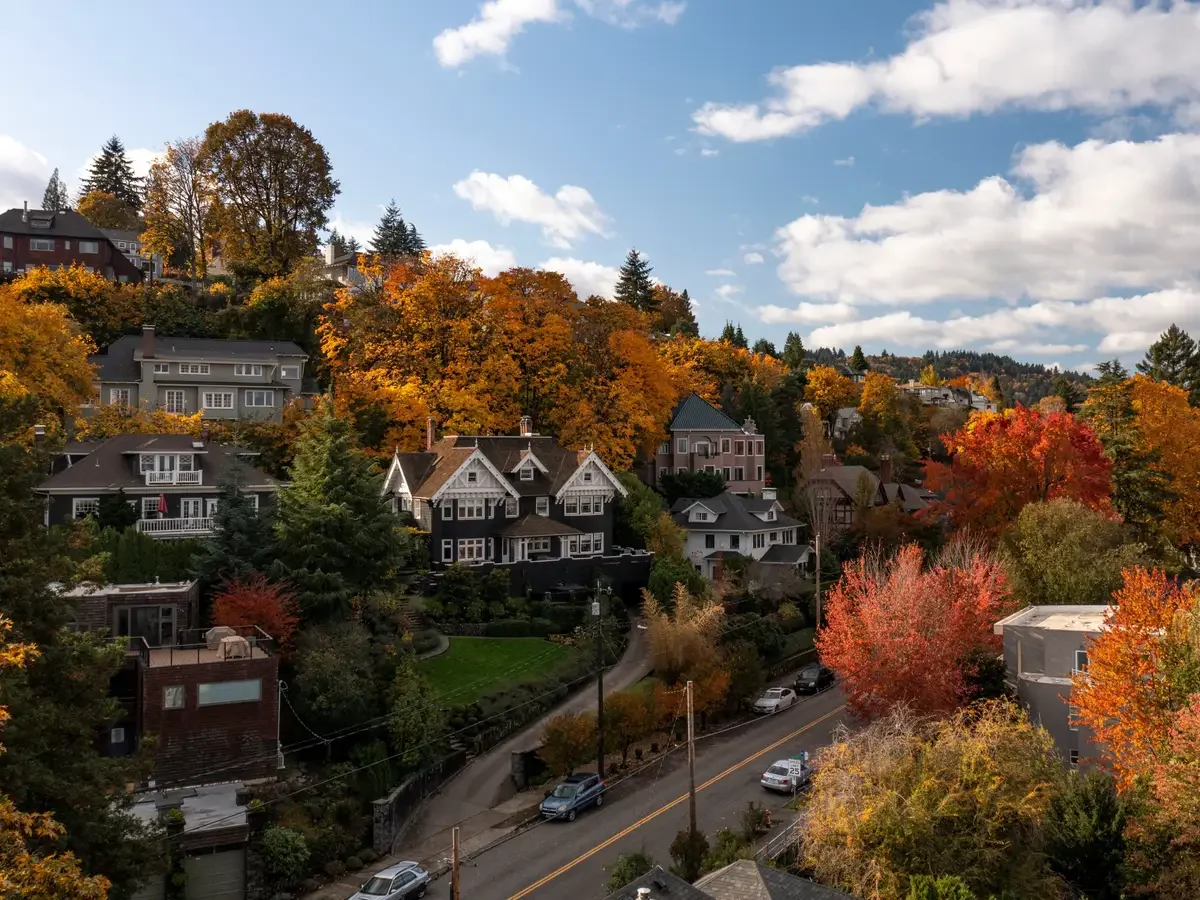
You can change things about a house that you don’t love. Hate those dated kitchen counters or questionable accent wall, don’t sweat it. But you cannot move your house twenty minutes closer to the places you go every day.
That’s why choosing a neighborhood deserves at least as much attention as choosing the house. Around Portland and Southwest Washington, a few blocks, a bridge, or a surprisingly steep hill can change your daily routine.
So how do you find your spot without opening 47 tabs and developing a part-time career in online neighborhood research? Start with a little local context, add a few useful tools, and then go try the neighborhood on.
Here’s how we’d do it.
Start Here: Urban Nest’s Neighborhood Pages
Before you fall in love with a listing, get oriented. Our neighborhood pages are the home base we recommend for exploring Portland, Vancouver, and the surrounding Oregon communities.
Start with the map, get familiar with the names, and build a shortlist:
Explore Portland’s Neighborhoods: Browse area maps, neighborhood names, local introductions, and featured homes. Use it to move beyond “somewhere on the east side” and start identifying actual places to explore.
Explore Vancouver’s Neighborhoods: Get oriented to downtown, east, west, north, and central Vancouver-area communities. Hough, Fisher’s Landing, and Salmon Creek are not interchangeable search terms, even when a listing website bundles them under “Vancouver.”
Explore the Communities Around Portland: Broaden your search to places like Beaverton, Hillsboro, Milwaukie, Oregon City, Gresham, and beyond. Some these areas are the hidden gems that don’t get the same buzz of the larger cities.
Our suggestion: choose three areas to explore first. Three gives you enough variety to notice what matters without turning every weekend into a regional transportation study.
And remember, maps are a starting point. A neighborhood name is useful context, not a guarantee that every block feels the same.
Shop for Your Actual Life, Not Your Vacation Personality
Before you compare neighborhoods, write down what an ordinary week looks like:
Where do you work, and how often do you need to get there?
Where are the people you want to see regularly?
Which errands happen every week?
Do you want to walk to dinner, or would you rather have more outdoor space?
How much traffic, street noise, and parking effort are you willing to live with?
What monthly housing cost leaves room for the rest of your life?
Pick three must-haves and a few preferences. “A comfortable commute” might be a must-have. “Walking distance to excellent pastries” might be a preference.
Test the Commute. Yes, the Actual Commute.
A Sunday drive is not a commute test. It is a scenic interpretation of what commuting might be like if nobody else had a job.
If you’re comparing Portland and Southwest Washington, test the bridge crossing you would actually use, in both directions, at the times you would travel. I-5 and I-205 serve different routes. “Close to Portland” only tells part of the story.
The same principle applies within Oregon. A home can look close to work on a map and still put a river crossing, a freeway bottleneck, or a winding hillside route between you and your desk.
For transit, use the agencies’ own tools:
TriMet Trip Planner: Check Oregon-side bus and rail connections, transfers, and travel times.
C-TRAN: Explore Clark County routes and cross-river connections using its trip-planning tools and system maps.
Look beyond whether a stop exists. Check frequency, evening and weekend service, the walk to the stop, and your trip home.
A nearby bus that doesn’t match your schedule is more of a neighborhood accessory than a transportation plan.
Do the Coffee, Groceries, and Rain-Jacket Loop

Once an area makes your shortlist, park and take a walk. Or roll, bike, or drive the routes that match how you get around.
Try an everyday loop: a coffee shop, a grocery store, a park, and back to a residential street near a home you’re considering.
Notice the details:
Are there sidewalks and crossings that work for you?
Is the route comfortably lit after dark?
Is that “nearby” grocery store easy to reach, or across a road you would rather not cross?
How steep is the trip home?
What does parking look like when restaurants are busy?
Do you enjoy the activity, or immediately want a quieter block?
Local geography matters. Hawthorne and Division are commercial corridors, not single official neighborhoods. A home near one end can offer a very different routine from a home farther along it. In Southwest Portland, a short distance on the map may include a hill with no sidewalk to walk your dog or safely roll a stroller.
On the Washington side, walking around Uptown Village is a different exercise from testing errands in Fisher’s Landing or exploring a property farther into Clark County.
None of those experiences is universally better. You’re finding the one that works for you.
And if possible, visit in the rain. We do have a little of that here.
Look Beneath the Listing With Local Mapping Tools
Once you have a specific address in mind, it’s time for the less glamorous research. This is where a little homework can prevent a large surprise.
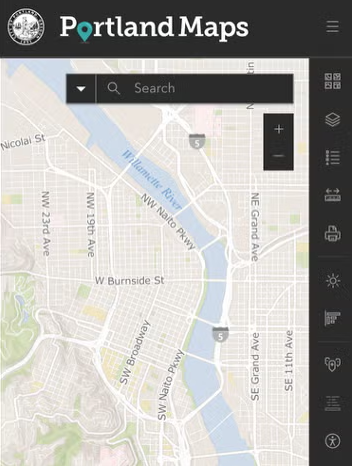
PortlandMaps is a useful public-data starting point for Portland property research. Use it to explore available property information and map layers, then follow up with the appropriate city or county office about zoning, permits, or other questions.
For Southwest Washington, bookmark Clark County MapsOnline and the Property Information Center. These tools help you investigate parcels, mapped boundaries, and available property records.
One local distinction worth checking: a Vancouver mailing address does not automatically mean a property is inside Vancouver city limits. Confirm the jurisdiction before making assumptions about rules or services.
Ask your agent to help you investigate:
What is the zoning on this property and nearby parcels?
Is there proposed development nearby?
What permits or records are available?
Which jurisdiction answers questions about this address?
Public records can lag or be incomplete. Use these tools to generate good questions, not to declare yourself the planning department.
Research Schools Without Reducing Them to One Number
If schools are part of your decision, start with the school district’s official address lookup or enrollment office. Verify the specific property’s attendance boundaries, program availability, and enrollment rules directly.
Neighborhood names and mailing addresses are not reliable substitutes for that step.
For Washington schools, the Washington State Report Card offers official school and district information. In Oregon, look for the Oregon Department of Education’s At-A-Glance School and District Profiles, alongside the district’s own resources.
Then go beyond a headline rating. Ask about the programs, services, transportation, and learning environment that matter to your household. A single score cannot tell you everything you want to know about a school.
Get to Know the Neighborhood When Nothing Special Is Happening
An open house on a sunny afternoon shows you one version of a place. Try a weekday morning, an evening, and a weekend visit.
Listen for traffic, trains, deliveries, and nearby activity. Check the route to the places you’ll use most. If green space is a priority, the Portland Parks trail resources can help you identify routes to explore, rather than assuming a green patch on the map has a convenient entrance.
Use local community calendars and neighborhood association updates to find an event or meeting, too. They can give you a more grounded introduction than another “ten best neighborhoods” list.
Online reviews and community groups like Nextdoor can offer useful leads, but keep perspective. One person’s experience is not a complete neighborhood profile. Sometimes it is just a very detailed account of a vengeful neighbor dispute.
Let Local Expertise Help You Ask Better Questions
There isn’t one “best” Portland neighborhood or one “right” place to buy in Southwest Washington.
There is a place that fits your budget, routines, priorities, and plans.
At Urban Nest, our agents bring their local expertise to help you compare those practical details, understand property tradeoffs, and connect with reliable information. We won’t choose your community for you or make assumptions about where you belong. That part is yours.
Start with our Portland neighborhood pages, Vancouver neighborhood pages, and Portland metro community maps. Then connect with an Urban Nest agent to turn your shortlist into a home-search plan.
Bring your commute questions, your non-negotiables, and your very specific feelings about home. We’re ready for all of it!